Dear Readers,


I now consider this blog to be my Juvenelia. Have fun perusing the archives, and find me at my new haunt, here.

Showing posts with label Men in Breeches. Show all posts

Monday, July 19, 2010

James Frain and Tom Hardy: We Saw You First


So recently two of my absolute favorite UK-based actors, both notable for playing slightly unhinged (or worse) characters, have popped into the popular consciousness, big time. I just thought I'd point out that before they were mainstream, they were BBC/ITV idols starring in highfalutin' adaptations of timeless British literature classics.

JAMES FRAIN: Before he was deranged vampire Franklin Mott on "True Blood" he played a closeted, clock-fixated member of the upper nobility, Julius Folyat, Duke of Trevenick, in "The Buccaneers" the Wharton adaptation with which I'm most obsessed, (the character in the book is the Duke of Tintagel, and he's not gay). And Frain also weirded it up playing loving but controlling hunchback Philip Wakem in the ITV production of George Eliot's "The Mill on the Floss," across from Emily Watson's enigmatic Maggie Tulliver. Also, of course, he played Thomas Cromwell in "The Tudors."

TOM HARDY: Before he won American hearts as sassy counterfeit man Eames in Chris Nolan's "Inception," Hardy smoldered and avenged himself across the moors as Heathcliff in Coky Giedroy's "Wuthering Heights." And he terrorized gold-hearted prostitutes and street urchins most magnificently, (along with his dog Bulls-eye) as murderous bloke Bill Sikes in Giedroy's "Oliver Twist."

It was nice to see his lighter side, even in this not-so-lite movie!

Monday, March 01, 2010

The steamiest period drama fan-vid ever

A tribute to the other Mr. Knightley, Jeremy Northam's err, earthier qualities--set to the "True Blood" theme song.

Somewhat NSFW. Contains literal bodice-ripping and more.


I'm having a stressy Monday morning. I found this this weekend while looking for "Emma" scenes. Hope it puts a smile, or something less wholesome, on your faces.

Sunday, February 14, 2010

Happy Valentine's Day

To my readers who love smouldering 19th-century heroes.


And romance in corsets and breeches:


YOU'RE WELCOME.

Thursday, January 28, 2010

A Gallery Of Extremely Handsome British Men

A Gallery Of Extremely Handsome British Men [Handsome Is] is up over at Jezebel and causing lots of drooling thereabouts. Check out all the Austen heroes who show up in the comments.

And don't forget OUR Gallery of period drama men:

#15-11, #10-6, # 5-1 and the new top five hotties are all here. And here's my photo gallery wherewith I made those lists.

Wednesday, March 11, 2009

Sexy Shakespeare Pic

I fear 'twould be negligent NOT to post this image upon my blog, particularly since it appeareth to be Shakespeare week here at EBC, i'faith:

'Zounds! Doth thou recall in thy mind a certain personage?(saith I without a trace of originality--it can be seen all about the blogosphere)
;)

Saturday, January 31, 2009

Quick Link: Literary Lads Worth Loving

I lied about the previous post being my last of the weekend.

Jezebel is discussing their favorite leading men from the realm of the novel... they like a lot of the same guys as I do! guys that Jezebel's Sadie lists that I agree with are Darcy, Rochester, Wentworth, and "Laurie before he grew up" (SO TRUE) but then she kinda just lists a bunch of major canonical heroes. I mean, she includes Newland Archer. I love Wharton's men as characters, but I wouldn't exactly go for them,' cause they are kind of weak sauce, emasculated by the strictures of Old New York Society. (Selden, Archer et al.would never risk anything for their lady loves, but rather suffer silently and submit to the smothering demands of old money-laden dowagers who control all social movement with their lineage-puppet strings.)

The h/t goes to K of South in the Winter who added a whole bunch of my fave fictional dudes to the list: L'Engle's Adam Eddinton (swoon) LM Montgomery's Gilbert Blythe, Gaskell's John Thornton, Austen's Henry Tilney. K likes Faramir from LOTR but I've always been an Aragorn girl (sorry, but I 'ship Aragorn and Eowyn til the end).

To this I'd add a few more: George Eliot wrote great heroes. I worship Will Ladislaw above all literary heroes, even Darcy I think, and Stephen Guest is sex on ice. Finally, we can't forget the literary pin-up boy that is EM Forster's wonderfully written George Emerson. In the YA world, I also like LM Montgomery's other major hero, the artist Teddy Kent and her hero from the bizarre cult-romance, "The Blue Castle," the mysterious Barney Snaith. And lastly, ever since James Purefoy played him, I've kind of had a thing for Rawdon Crawley. Becky Sharp didn't know what she had. *

That's it for now. I'm sure I'll have other ideas pop into my head. Who are your most beloved heroes of the page?

*(Oh and also Humbert Humbert and Portnoy... NOTTTTT.)

Tuesday, January 27, 2009

Bridget Jones Interviews Colin Firth


According to my dashboard, that last bit of trifling nonsense, whatever it was, was my 500th post. To celebrate, and because I've got Bridget on the brain, here is this super meta scene from the "deleted scenes" of the second film, Edge of Reason (even funnier in the book). I think it sums up a lot of facets of this blog.

Sunday, January 11, 2009

The New Top Six Hotties--Post 2002

[Previous installments of my "hotties" series: #15-11, 10-6, 5-1]

This is my list of period literary adaptations' most studly soulful leading men... since 2002. I had to jiggle the qualifying date to fit everyone in whom I desired, but I think it all works out.

Anyway, recall that this is a personal project and has no official significance whatsoever and thus no coherent rules:) Now ogle + debate away!

Oh, and conspicuoulsy absent are actors from 2007's adaptations of Persuasion and Mansfield Park. In such cases as these, a good memory is unpardonable.

#1 Richard Armitage

Recognition of Richard Armitage's delightfully dark and smoldering John Thornton from the BBC's 2004 "North and South", was being clamored for most enthusiastically in the comments section of the previous post.* But my readers need not have feared--this performance utterly captured my heart and threw all of England into an afore-unknown craze called "Gaskell-Mania." Why was Armitage so amazing? He played the role with such repressed passion, and effected a moving transition from stern and forbidding mill-owner to humbler man touched by love's gentle hand, a transition that rivals the change underwent by Darcy in between"Not handsome enough to tempt me" and "dearest, loveliest Elizabeth." Seriously, to parrot commenter Laura E, if you haven't seen this mini-series, go out and rent it RIGHT NOW. It's television at its most extraordinary. I also loved the book.

#2 Toby Stephens

I got into a mini-quibble with a reader about the quality of Ciaran Hinds' interpretation of that memorable Byronic hero, Edward F. Rochester. But CH dispute aside, Toby Stephens truly transcended his pretty-boy looks to play a nearly-perfect Rochester in the 2006 adaptation of "Jane Eyre," an adaptation that truly gave one of the best novels ever written its due. Stephens neither gets Rochester off the hook for his domineering ways and the whole bigamy thing, nor does he render him too unsympathetic, and it's a very difficult line to walk. The emotional bond between Jane and R--the thread that goes from one heart to another--is truly present in this performance.

#3--JJ Feild As Mags always reminds us, it was unnecessary for the screenwriters of '07's "Northanger Abbey" to make Henry Tilney, one of the wittiest and quirkiest characters written, act "mean" towards poor Catherine Morland during one particular scene. But that's a screenwriting issue. As BethDunn points out in the comments, JJ pulls off the mix of clever one-liners, wry observations and occasional awkward proposing (in the hedgerow) that I think Austen would have been largely pleased with.


#4 Dan Stevens

So on the whole I didn't think the "2007 Sense and Sensibility" held up to Ang Lee's '95 big screen version, but one way it excelled its predecessor was Dan Stevens' Edward Ferrars. Basically, his performance kinda pwns Hugh Grant, previous awardee for the same role. His pain was deeper, his passion stronger, his awkwardness less painfully funny. And there was that chopping wood in the rain scene, which was no Darcy-in-the lake, but wasn't half bad either.


#5 Richard Harrington his Allan Woodcourt helps the poor in the slums even though there's no money in it, and he loves Esther Summerson even after she is horribly disfigured by some creepy Victorian disease I can't recall. Nuff said. ("Bleak House," 2006). Just look at that intensity! No wonder he won out over romantic rival Jarndyce.


#6 Hugh Dancy. (2002's "Daniel Deronda.") He's an extremely sensitive, soulful secret Jew, and he is being being fought over by the blonde, shallow (but trying hard not to be shallow) Gwendolyn Harleth and the beautiful, talented, pure Mirah. It's good to be the king. Dancy's performance anchors an adaptation of a very difficult work and makes Daniel's anguished position really come to life.

*(Thanks K, starling, femblogproject, BethDunn, Laura, MFL, anonymous et all for being so engaged!)

Further reading from the EBC archives:

North and South
Liveblogging Jane Eyre
Live-Blogging Northanger Abbey
Live-blogging Sense and Sensibility
Daniel Deronda

Saturday, January 10, 2009

Masterpiece Kickoff Madness: This May Be The Last Merry Season

Bronteblog points out a MOST DISTRESSING article in the Guardian called "The Death of the Bonnet" about changes in the BBC Drama department.

This change, which follows the appointment of a new head of drama commissioning at the BBC, will mean that in future there will be less of the types of serials that have characterised the corporation's output over recent years, such as Tess of the D'Urbervilles, Lark Rise to Candleford, Oliver Twist, Jane Eyre, Daniel Deronda and Pride and Prejudice.

In their place the BBC is planning more period dramas along the lines of this week's The Diary of Anne Frank and the remake of John Buchan's spy novel, The 39 Steps, which aired over Christmas.

The move comes after ratings dipped for BBC1's most recent costume drama, Charles Dickens's Little Dorrit, which sank to a low of 2.5 million viewers for one midweek episode last month. By comparison, The Diary of Anne Frank pulled in about 4.5 million viewers, while The 39 Steps, starring former Spooks actor Rupert Penry-Jones, attracted 7.3 million.

A senior BBC drama insider told the Guardian: "There is to be an evolution in the presentation of period dramas, moving away from classic 19th century so-called 'bonnet' dramas to looking at other periods of history.

"This will allow us to look at other times and places in British and world history. The aim is to give drama audiences something new and different to enjoy."


This is straight BS.

But there are a few reasons to not despair.

First, the BBC knows it has a surefire thing going with many wildly successful 19th century adaptations, and so if their season focuses a little less on such things and has more variety, it doesn't mean it will be abandoning them entirely.

Secondly, ITV is picking up the slack. Their quality has been much poorer than their counterparts, but there are glimmers of hope, such as last year's Northanger Abbey.

So while this is disappointing, I am most assiduously determined to see the bright side.

Friday, January 09, 2009

THE TOP FIVE PERIOD LITERARY ADAPTATION HOTTIES

First, let's remind ourselves of some of the criteria:
  1. Smouldering
  2. Sneering
  3. Delighted chuckling
  4. Breech-wearing [and lifting up tails whilst sitting down]
  5. Steed-riding
  6. Manor-owning
  7. Witticism-uttering
  8. Maintaining an air of mystery
  9. British-accenting
  10. Oath-swearing
  11. You get the idea. Here they are.
#1 Colin Firth

"In vain have I struggled."
Colin wins, hands-down for the resurgence of Darcymania--his Darcy was more snide, haughty, and cold than any other in history, and his diving into the lake, fencing, and bathtub scenes famously reversed the male gaze and made him a sex object. Then, his transformation to humility and stammering awkwardness after Jennifer Ehle's Lizzy rejects him puts H-h-hugh Grant to shame. Colin's also done a nice job glowering and panting after Scarlett Johansenn as the painter Vermeer in Girl With the Pearl Earring, seducing young Irish ladies as a caddish landowner in Circle of Friends, trading clever barbs with Rupert Everett in the Importance of Being Earnest, and parodying himself in the Bridget Jones movies.

#2 Greg Wise

"Will you allow me to ascertain if there are any breaks?"

Supplanting Kenneth Branagh as Emma Thompson's leading man in real life gets him points, but even though he's potentially less famous than some of the others on this list, he's this high because he owns the role of the cad so utterly and completely. From the ultimate betrayer, Willoughby, in Sense and Sensibility (leading Kate Winslet to alter a recital of a Shakespeare Sonnet thus: " Oh no! It is an ever fixed mark that looks on tempests and is never shaken. Willoughby. Willoughby. Willoughby.") His finest work might be on Materpiece Theater: in Madame Bovary, he shows his bare ass off as Rodolphe, consummating his love with Emma Bovary in a forest (with horses nearby. They were out riding, you see.). And he also "takes" Nan St. George, corsets and all, in the midst of a cornfield in TV's turgid adaptation of Wharton's "The Buccaneers". No wonder Emma Thompson loves him so!

#3 Sir Laurence Olivier.

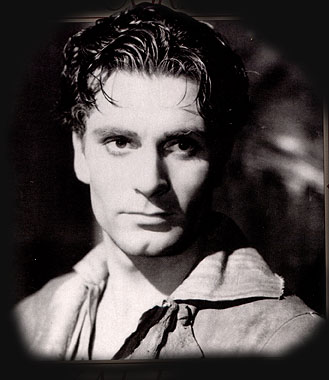
Because besides all that Shakespearean stuff, the Vivien Leigh business, and Lord Nelson, Sir L. got to play both romantic heroes Darcy and Heathcliff, (not to mention the uber-secretive Maxim de Winter) and he perfected the snarling glower, the pacing restlessness, and the lustful eyes long before the current hunks were even born. It's enough to get a girl singing Kate Bush at the top of her lungs.

"Cathy!"

#4 Ciaran Hinds

Alright, so the was in worst movie ever ever ever (Miami Vice). But his performance as Captain Wentworth in Persuasion was so so so finely wrought, un-Hollywood, and sexy in a subdued way that we finally root for him over the more traditionally dishy Mr. Eliot (more on that lothario in the previous installment). Plus, he makes a wild and passionate Edward Rochester in Jane Eyre, he's a kick-ass julius Caesar on "Rome", and he dared to play the Mayor of Casterbridge, one of Hardy's most depressing characters (other than obscure old Jude), which speaks to his integrity and craft and all that other important actor-y stuff.

"You pierce my soul."

#5-Jeremy Northam

Maybe it's because he redeemed Emma (while Gwyneth was ugh) ...but more likely because of his spot-on turn in An Ideal Husband as a confident, noble politician with a shameful secret in his past (held by the delicious Julianne Moore)... and even more because of his ruthless, conniving and yes, very sexy (bearded!) role as Prince Amerigo in the Merchant-Ivory adaptation of James' The Golden Bowl. He's got Uma and Kate Beckinsale pining away. And because of his fandom.


Okay, so what are your quibbles? I'm happy to debate 'em.

And don't forget I'm adding five new hotties from movies I've seen in the last two years... So of those, WHO WILL BE NUMBER ONE? Will it be a concealed Jew who thinks he's the bastard spawn of nobility? A snarling mill-owner softened by a lady's touch? Or what about an "emo" Rochester, an Edward Ferrars who chops wood in the rain, or perhaps a country doctor who pines after a young winsome patient? Tune in to the next installment.

Thursday, January 08, 2009

Period Literary Adaptation Hotties, # 10-6

Here's round two. Be ready for the top five, and the post-2006 five later this week.

Who steals our hearts in the big or small screen dramatizations of Wharton, Austen, Bronte and Bronte, James, Forster, Eliot, and more? Part 2.


#6-Daniel Day-Lewis

Makes the list for his embodiment of the early-modern romantic hero in the Age of Innocence. As in, he plays that epitome of wealthy indecision, the New York son of fortune Newland Archer--who is caught between Winona Ryder's sweet intended fiancee and Michelle Pfeiffer's sensual countless Olenska. From the first scene in Scorcese's underrated film where Day-Lewis puts the opera glasses on and sees Pfeiffer across the massive opera house, to the final scene with leaves falling in a wistful shot of Paris, he's melencholy and pondering and yes, we realize, the Victorian era is long gone. In A Room With a View, Day-Lewis plays the safe fiancee himself, Cecil Vyse, unable to understand why Helena Bonham carter has a thing for Julian Sands' George Emerson (and more on him, later).

#7--Timothy DaltonWe're bonded to this rather gruff and severe actor because he's gone where no one, not even Sir Lawrence himself has gone. To the moors...twice. To play Bronte anti-heroes Rochester and Heathcliff. His Heathcliff was particularly brutish, growling, and, well... dirty. And that's why he deserves a spot.

#8-Anthony Hopkins
What? Anthony Hopkins? Think about it. He lights up Merchant Ivory productions, and is equally at home on a manor lawn as he is feasting on brains. Obviously, he particularly dazzles in the tear-jerking, understated butler role that's one of the best roles in literature or film... like, ever ever ever...The Remains of the Day opposite Emma Thompson. And he does Forster proud as the less-than-honest Wilcox hubby in Howard's End opposite....Emma Thompson. Plus, he also plays this really erudite guy named Hannibal.

#9-Samuel West
Who the heck is he? Only the unprecedentedly dishy Austen anti-hero Mr. Elliot, so beautiful, so charming, that when he looks up at his cousin Anne on the beach and doffs his hat, staring wide-eyed at her reborn beauty, everyone knows that he's about to become a player for her heart. West also plays Helena Bonham-Carter's ill-fated working class love interest Leonard Bast in Howard's End. And anyone who has an affair with B-Carter while she's in Corsets is, like, seriously Major.

#10-Matthew MacFayden
I wasn't going to put him on this list, because of my general opposition to the liberties the new "Love Actually... And Pride and Prejudice" Kiera Knightley -heaving-bosoms-in-the-mist film version takes with Austen's text (I don't have the same problem with Ang Lee's equally rapacious S&S, but I'll explain that another time). But MacFayden is damn good, kind of mixing sneering and sniffing with a bit of adorable lip-trembling. And I hear he plays Sir Felix in the Masterpiece Theater Mini-series of the Way We Live Now, which I'm currently reading [fall '06], so that's why he's grudgingly up here. [NOTE: He is also the star of Little Dorrit, and I think he's kind of perfect for its hero, Arthur Clenham.]


Wednesday, January 07, 2009

Period Adaptation Hotties, #11-15

In honor of Masterpiece classic re-booting this month, I'm re-posting this series of my favorite leading men from costume-drama literary adaptations. After I post all 15, I will add a fourth post with my top 5 favorites from 2006-2008, mining the fertile field that has been the past few seasons of adaptations.

WHAT I SAID THEN + my current comments in brackets:


Julian Sands as the "beauty!" and "joy!" loving George Emerson who rocks Helena Bonham Carter's world in "A Room With a View" ]plus, there's that scene where "La Rondine" is playing in the background and they kiss on the hill in Fiesole]


Alan Rickman,
as the staid Colonel Brandon in Sense and Sensibility (remember how he paces back and forth when Marianne is sick and says: "Give me something to do or I shall go mad!"?)
Hugh Grant as the annoyingly weak-tempered but very sweet Edward Ferrars in the same.


Rufus Sewell, now known as the crazy would-be emperor in The Illusionist, for his stunning, stunning Will Ladislaw (my favorite literary hero ever, even more than Darcy) in the Masterpiece Theater production of Eliot's Middlemarch. [Even though Andrew Davies ruined the ending.]


Eric Stolz as an effete, overwhelmed but passionate Lawrence Selden in Terrence Davies' under-appreciated adaptation of Wharton's The House of Mirth.


And the razzie goes to:
Jonathan Rhys-Myers, a personal favorite, for his miserably churlish and bratty George Osborne in Mira Nair's frustrating but excellent production of Thackeray's Vanity Fair [and now for turning Henry VIII into a churlish, bratty... hmmm. Noticing a pattern?
]

Monday, November 17, 2008

Austen-mania says: "Rumors of my demise have been most unfortunately overindulged"

Who said Austen mini-serieses and films were finis, stepping aside to give the dark romance of the Brontes and the comical commentary of Dickens their moment in the mini-series sun?

Austenblog reports on the rumors that there's a new BBC Emma in the works. I hope so, because neither the Kate Beckinsalee "grumpy" version nor the Gwynneth Paltrow "ditzy" version totally work as adaptations of the novel's esprit. Clueless is the best film version of Emma so far.

The Austenblog community is starting a campaign to get Richard Armitage, aka the smouldering hero of North and South cast as Mr. Knightley, thereby consummating a union devoutly wished by Austen-fans throughout the world. Also rumored to be screenwriting is Sandy Welch, who did both the admirable Cranford and the wonderful Jane Eyre and is fast becoming the new Andrew Davies.

It's a very exciting development, if it's true.

Tuesday, December 18, 2007

Daniel Deronda--reviewed and re-Jewed.

I love me a sexy Hebrew.


Greetings readership. It's been a long time, as they say, and there's much to catch up on that will never truly be caught up upon, because time is ephemeral and stuff. (Again, what I've been doing.)

To prove my mettle, I return to you with a full-on discussion of Daniel Deronda, a very wonderful and complex work by George Eliot that helped me get through the December blahs. And of course being an egalitarian bookworm chick, I followed up my dense reading with a dense viewing of the obligatory Andrew-Davies penned BBC miniseries, which wickedly sexed up the villain to such an extent that he may qualify as the worst. husband. ever., even for a BBC miniseries. Which as we all know is saying a lot.

As all the critics like to remind us, Deronda is a novel with two parts, the connecting thread of which is our eponymous hero, Daniel. Said critics also agree pretty unanimously that the "Jewish" half, wherein the gentleman/prince Daniel, like Moses, discovers his true identity and redeems his people, is not nearly as well-written or brilliant as the half which narrates the bitter redemption of beautiful, selfish, Gwendolyn Harleth and her journey among the aristocracy. Write what you know, as they say. While Eliot is able to perfectly illuminate the miserable lot of women by using real characters (Gwendolyn might be the most psychologically astute portrait of shallowness in literary history), when she gets to the Jooz, she's so busy trying to portray them as exotic and wise and sinless and mystical that she forgets to make them people.

I was almost more enamored of her stereotypical depiction of the somewhat "common" Cohen family and their silver shop than by the exalted Mordecai and Mirah. This conundrum, not coincidentally, really reminded me of Uncle Tom's Cabin (Harriet Stowe and Eliot were correspondents), with its pure, sinless oppressed blacks, and its solution of sending them to Liberia, just as the sainted Deronda and Mirah go off to Palestine. All this is complicated stuff-- there's more than a lot of unintended racism in both novels, which use the innocent "other" to throw into relief the corruption and decay of their societies. However, Stowe and Eliot are also responding to the bigotry of their peers and may have felt they didnt have room for nuance.

It's tempting to say that the moral of Eliot's literary failing is that art shouldn't be sacrificed for politics. However, we can't deny that public reaction to these novels was much stronger than it would have been to op-ed pieces because people were moved by them.

Anyway I'm glad I tackled this book. George Eliot may be the most formidably intelligent of the 19th century novelists, and the novel has enough redemptive literary qualities that one can enjoy it both as a work of art and a relic of its time-- (AND a retort to the Trollopes and Dickens' of the world who put nasty Jewish characters in their book.)

But on to the BBC version... it was just so gorgeously well-done. Nice work, Andrew Davies. Hugh Dancy is a very pretty man, and he captured sensitive Daniel Deronda perfectly while Romola Garai was also an excellently spoiled Gwen. I really enjoyed seeing six degrees of Austen adaptations. Amanda Root (aka Anne Elliot--Persuasion) was a simpering Mrs. Davilow. And of course the actor who played Henleigh Grandcourt (Mr Rushworth---Mansfield Park) was perfectly sinister. And lastly, slimy Lush was played by David Bamber (Mr. Collins--Pride and Prejudice) to creepy, obsequious perfection. Another fun factoid-- Jodhi May, who played Mirah, was bitchy, plain Cousin Grace Stepney in The House of Mirth.

Friday, May 25, 2007

Nostalgia Trip: Girl With a Pearl Earring

\


I just tuned into this on IFC while finishing some work. I'd forgotten how much I enjoyed this film (and book) as a commentary on the Power of Art. The story of Grite and her entry into the world of Vermeer shows just how the realm of the sublime aesthetic experience can illuminate our ordinary lives and fill them with new understanding--and also reveal the wretchedness of our prosaic existence and make us dicontent.

Colin Firth is in top form as the brooding, ambitious, clog-wearing, painter Vermeer, Scarlett Johansen is better than usual playing a starstruck maid and portrait subject, and it's interesting to See Cillian Murphy as the strapping, vital butcher's son Peter (although he's too pretty for the part) instead of the wild-eyed, simpering psychopaths he's been attracted to playing recently.

The film's soundtrack is incredible and the cinematography is gorgeously evocative of Vermeers' work. It's almost like watching a 2-hour painting, which is all fine and dandy with me. But such a film is not for the action-addicted among us; the ration of screen time to words spoken is as low as it goes.

Sunday, April 22, 2007

Lizzy Bennet doesn't giggle.

Many Jane-ites and Austen purists likely felt a visceral anger towards Pride and Prejudice 2005 (the one I've nicknamed "Love, Actually, and Pride and Prejudice") the minute they saw it, and perhaps with distance softened to realize that a good film adaptation of a good novel, to use an Austen-phrase, "may take liberties." (That's certainly how I feel about the Ang Lee/Emma Thompson Sense and Sensibility, which turns Austen's anti-Romanticism upside down with fantastic results. )

But my trajectory vis-avis "LA&P&P" '05 has been the opposite. I saw it on a cold November weekend, during a hard year in my life, and was for the most part drawn in by its warmth and romance and visual beauty. I quibbled a bit, but viewed it as another S and S -- a well-done, if Hollywoodized, two hour adaptation of a much longer novel. I also likened it to the Olivier/Garson version from back in the day. This new movie imposes a contemporary wistful and unsure mindset on the story, just as that one infused Austen with the golden age of Hollywood's sassy back and forth aesthetic.

In retrospect, though, I've found the adaptation harder to take. The whole reason I'm writing about this now, in fact, is because I tuned in to the last 40 minutes on HBO the other night, and was amazed by how much more cynical and irritated I was , yelling "WHAT?" at the screen, and "Lizzy Bennet would never do that!" Even my viewing companion, who may have a more lax attitude towards Austen purism than I do, audibly groaned during several scenes, particularly those that involved Kiera Knightley giggling or whimpering. For heaven's sake, LIZZY BENNETT DOESN'T GIGGLE.

And that's where I'm the most frustrated with the adaptation. Lizzy Bennett is the strongest, realest, most fascinatingly intelligent female character in history--or at least the most resonant example of the "spunky heroine." The way the film dumbs her down and makes her more in thrall to Darcy (and even casting a physically small actress in the role) is kind of, well, it's clearly the work of a man. And pushing both Darcy and Bingley towards being a pair of awkward and shy frat boys who can't get their love lives together undermines their patriarchal arrogance and immense power, which is a huge part of Austen's landscape.

The portrayal Mrs. Bennett, whose hysteria in the book begins to make the reader doubt her sanity, and Mr. Bennett, who is self-righteously indifferent, as well-meaning and kind parents is one thing, but robbing Lizzy of her self-command and sauciness by bestowing her with trembling lips, teary eyes, and moments when she's so consumed by her overwhelming love for Mr. Darcy, she stands against the wall and breathes to calm herself down is somewhat offensive. And it's just not my Lizzy.

As for the dialogue, it insults our intelligence at times by going beyond Austen's words in an unnecessary way. Here's Darcy's second proposal, during the part of the movie where I start yelling "Cathy! Heathcliff!" because of its turgidity:
My affections and wishes have not changed, but one word from you will silence me forever. If, however, your feelings have changed, I will have to tell you: you have bewitched me, body and soul, and I love, I love, I love you. I never wish to be parted from you from this day on.
To quote a friend, HUH? Was that last bit really nceessary? This happens over and over in the dialogue. There's a line right from Jane Austen, we laugh or gasp because it's brilliant, and then whatever was being cleverly replied is immediately re-stated in blunt modern terms. We may laugh or gasp again, but it's not for the same reasons, I assure you.

Anyway, I don't mean to be too much of a hater or a puritan-- as a rule, I adore a little sexing-up of Austen. And I deeply appreciate some of the finer moments in the film, as well as its luscious scenery and score. The classic scenes--Jane and Lizzy in their bedroom, for instance--still pack an amazing wallop.

The film is hardly a butchering. I just feel that it could have been that much better if it had trusted the audience to read the source material's subteties. And I wish the film-makers had kept Lizzy more composed, and yes, even arrogantly prejudiced. I happen to like Kiera Knightley, but Jennifer Ehle and even Greer Garson are so spirited and clever and strong in comparison. Giving Kiera more snobbery and headstrong self-importance to work with would have been a bigger challenge, and perhaps done more justice to her talent.

And lastly, the "American" ending with the bit that the Brits refer to as the "snog" and the "goddess divine"/"Mrs. Darcy" crap. At this point both my companion and I changed the channel, because it's a complete travesty--(and a great example of how the Brits view Yankee sensibilities). And maybe that's why my repeat viewings are so negatively influenced. Watching the movie without knowing about that final scene was a lovely experience, but perhaps the sacrelige of the ending colored my view of the entire two hours preceding it. Who can say?

The Andrew Davies version is definitive, in my opinion, not because of Colin Firth or Darcymania of any of that silliness, but because of Ehle's assertive, attractive, clever and pitch-perfect Lizzy.

Monday, April 02, 2007

The Jane Austen Season on ITV

Damn you, United Kingdom! Damn you. We have to wait til the Autumn. We always have to wait til the Autumn.

This is sort of a silly preview, but I'm still really excited, esp. for Mansfield Park and Northanger Abbey. No version of Persuasion, or any Austen movie in fact, will ever ever touch the 1995 Amanda Root Ciaran Hinds one for me. In my mind, it' s the most perfect two hours of cinema ever.


Enjoy!

Tuesday, March 20, 2007

JONESing for some Joneses....


On Friday night, while resting in preparation for my full day of teaching (yep that's right, I work on the [Jewish] Lord's day) my bf and I were flipping back and forth between two Joneses and two Fieldings. The first Jones was Bridget Jones: the Edge of Reason, a somewhat piss-poor adaptation of a riotously witty book by Helen Fielding, and the second is the classic adaptation of Henry Fielding's Tom Jones, one of the first bildungsomans ever published in the English lingo.

Now fellow-ette's not so hip to the world of the 18th century novel. All she's read are Evelina, Crusoe, and a bunch of potboilers by Eliza Haywood, Aphra Behn, and Anne Radcliffe thanks to her awesome "Women and the Novel" class--taught by a wonderful female prof who naturally did not get tenure at Harvard. But I know enough about the turgid old 18th century to know that sex and ribaldry were far from off-topic in the pre-victorian era, and that as a result of this no-taboo age, the Tom Jones movie, if not particularly suck-you-in fascinating, is kind of hilarious. Like, 18th century breeches and low-cut blouse rolling in the hay/falling into ponds hilarious.

And the very necessary comparison between Bridge and Tom was all the more brilliantly illuminated by watching snatches of both movies back to back. Here's the thing; people dismiss Bridget Jones as chick-lit, and in some ways it did usher in that era. But the novels, light-hearted as they are, are so much more than the ro-co-standard movies, despite the good acting, can illustrate. First of all, there's the importance of the literary allusions. There's Tom Jones, there's Austen everywhere, and knowing your British literature will make you appreciate Bridget's adventures all the more.

Second of all, getting rid of Bridget's voice-over narration in the second film takes away the most vital part of the books: namely Bridget's "diary," which is witty, knowing, and a lot stronger than multiple screen shots of the wobbling, tottering, idiot Renee Zellweger would have us believe.

So in conclusion:
  1. Helen Fielding is a sly genius whose books are much cleverer than the screen can convey.
  2. Tom Jones (not the singer, the character) is a rakish but well-meaning sex panther.
  3. Don't knock [chick l]it till you've tried [chick l]it
  4. Because it may be something more.

Friday, February 23, 2007

Do leather pants count as breeches?


Mere months after being named a runner-up in EBC's survey of the hottest men to ever canter through a Darbyshire field (or hail a hansom cab or some such) onscreen, Hugh Grant's career comeback continues.

And his resurgence prompts me to ask this question: how can someone play the same bloody role (with small variations) in every single movie he's in, and still be totally winning and captivating and generally adorable?

I'm not sure... truth be told, I keep waiting to be tired of Hugh, but I never am. This evening, I saw the sometimes-cute, sometimes-cloying Music and Lyrics mostly for him, and he made the entire thing worth it (so the the hilarious songs by those Fountains of Wayne dudes).

As for his co-star Drew Barrymore, who also plays the same character in every single film she's in, her sunshiney-sweet personality makes me want to know her as a person, but I find her far from convincing as an actress. Whereas my homie Hugh is probably an unendurable cad in real life, but a pleasure to watch onscreen.

Now, lest you think I'm misogynist because I love him for the same quality I fault her for, I'd like to point out that Entertainment Weekly's Liza Schwarzbaum had it right when she pointed out that Emma, Renee, and Sandra all were better foils for the self-deprecating, biting humor that is Hugh's forte than Drew. And she needs someone like Owen Wilson or Matthew McConaughey to match her laid-back goofiness.

Take-away points:
*Hugh is the man
*Liza Schwarzbaum is smart
* (and EW is a fine-ass magazine.)
*I like movies with nice happy endings
*popcorn is good too

Tuesday, February 13, 2007

North and South--Book and BBC


Have made me give up American Pastoral, and work, and breathing, for a few days.

But how worth it it's been! What a fantastic story.
I'm in literary love.

...

I love it when a wonderful book and a wonderful movie adaptation are each wonderful in a different way. Although the Gaskell book exposed social ills, Victorian-style, and featured more romantic chemistry and less caricatures than a Dickens novels, the movie successfully managed to amp up the drama on both counts by taking us into the mill and casting the unconventionally gorgeous Daniela Denby-Ashe and the properly smouldering and rough-shod Richard Armitage.

I haven't been that absorbed in a book in ages; the edgy love story wasn't all that pushed me through it either. Margaret Hale is an incredible character; flawed but fiesty, kindly inclined but young and naive. Gaskell's style is properly Victorian without being difficult. I love her straightforwardness. She's like an Eliot for the working classes.

I also found the novel to be incredibly proto-feminist in the way that it advocates a union between female and male to bring about social change. Gaskell has presented us with a strong woman whose kindness influences a formerly male-run institution to move forward in a compassionate way, and to me that's not a cop-out, it's incredibly insightful for its time. And actually for ours. Because feminism isn't just about women being badasses and assuming power, it's also about formerly patriarchal institutions gaining a bit of gentleness. You know who understands that? Elizabeth Gaskell, that's who!

Hillary Clinton, are you listening?